Unexpected Death in the OR
Unexpected death in the perioperative environment is exceedingly rare and often is related to severe trauma cases or very unstable patients coming to the OR. Advances in technology have enabled healthcare providers to support and sustain life. This lets the team transport a dying patient out of the OR to ICU or PACU, and allows loved ones to be with them before withdrawing care.
Unexpected Death in the OR: Organization Specific Protocols
Each facility must have a protocol for unexpected death in the OR. In general, if a death occurs unexpectedly, the coroner must be called in to investigate. In these situations, all lines must remain in the patient (i.e., IVs, catheters, endotracheal tubes) and the body must not be moved or left unattended.
After the coroner has assessed the patient and provided any additional instructions, the perioperative team can provide post-mortem care. Again, this means not removing any lines, drains or tubes, and only washing the body if cleared to do so by the coroner.
Unexpected Death in the OR: Family Viewing
In some cases, the family may wish to see the patient before they go to the morgue or are released to the funeral home. This can be challenging in the perioperative environment due to limited space availability and the difficulty of bringing visitors into the controlled environment. Oftentimes, the patient will be transported to another room. This could be in the ICU, PACU, or a floor room where the patient was residing before coming to the OR. Some institutions have a private family room near the morgue. It is important for the perioperative nurses to coordinate with the family and nurses who were caring for the patient preoperatively.
Perioperative Nurses and Unexpected Death
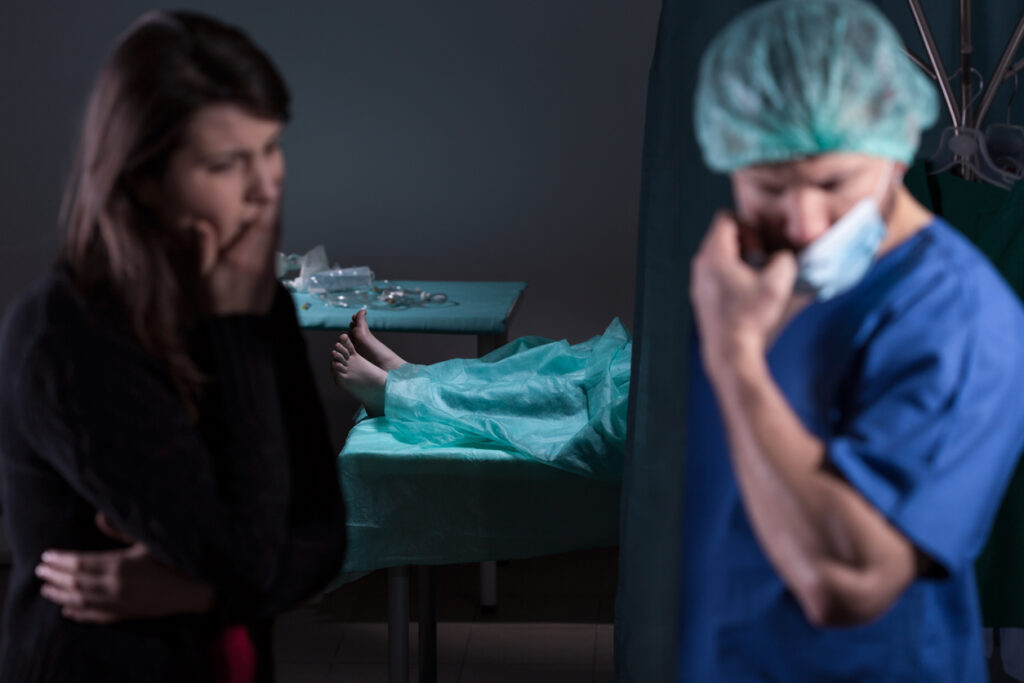
As mentioned earlier, unexpected death does not occur often in the OR. When it does happen, it can be a very a traumatic and emotional experience for all perioperative staff. It is important that the entire perioperative team take time to debrief after these events.
Debriefing After Perioperative Emergencies
Debriefing can occur in many different formats. Overall, debriefing is an opportunity to:
- Learn from experiences.
- Reflect on the event/experience.
- Identify system gaps and improve patient safety.
- Recognize the steps taken and to provide closure for all perioperative team members.
This can only occur if the debriefing session is set up in an environment of safety. At the beginning of the session, it needs to be made clear that all opinions are important and that this is not a place to assign blame.
(Arriaga, et al., 2020; Clegg & MacKinnon, 2014)
Using Critical Incident Stress Management Programs as a Model for Debriefing
Critical incident stress management programs have been used by paramedics since 1983. There are two phases associated with this program. The first is defusing and the second is a critical incident stress debriefing (CSID).
Defusing occurs shortly after an incident occurs. This is an informal meeting with peers where an open discussion takes place. The goal of defusing is for staff to decrease tension, talk through the event, and allow individuals to gain control of emotions. Key points brought up during the defusing session can be used during CSID.
CSID can take place using various models. It is important to know that CSID is not therapy but a tool to identify staff who may require additional support or counselling.
(Clegg & MacKinnon, 2014)
Debriefing After Perioperative Emergencies: Does it Happen?
In a study of anesthesiologists in Alberta, only 14% of those involved in an unanticipated death participated in a debrief session afterwards. However, surveys of perioperative team members have revealed that they believe debriefing sessions after patient death or critical incidents should take place.
Barriers to implementing debriefings immediately after an emergency event include:
- Other urgent clinical needs — i.e., other emergency cases that need to follow in the OR.
- Lack of trained personnel to lead debriefing sessions, and discomfort about the emergency event.
- Fear of repercussions or judgement from colleagues.
- Lack of support from management.
- Lack of overall buy-in from the team.
This underlines the need for formal policies to support debriefings after an emergency event in the perioperative environment.
🧠 Graded Activity
In Blackboard, complete the Graded Activity: Effects of Perioperative Death on Nursing Staff.
Summary
Perioperative emergencies can occur during the most routine cases. It is vital that perioperative nurses develop situational awareness and that they are ready to act at any moment. They must have an acute awareness of the potential emergencies that can occur in the OR and know what steps need to be taken immediately, who must be called to help, and what supplies may be required. In any emergency event, including an unexpected death, it is important for the perioperative team to debrief and recognize that each team member will process the event differently. Additional counselling and supports should be made available to all team members.